 English
 Čeština
lounges of Elisabeth of the Premyslids | Daily 10:00 a.m. – 6:00 p.m.
THE EXHIBITION is included in the standard admission fee.
Join us on a journey to the era of the First Czechoslovak Republic and discover the secrets of ladies' handbags and the love letters they once concealed. This intimate exhibition presents objects from
1900–1930 associated with remarkable personalities.
At the beginning of the 20th century, a handbag was a woman's private world in miniature: it held her powder compact, handkerchief, visiting cards and letters she would entrust to no one else. The exhibition brings together sixteen handbags and bags from 1913–1930 and the love letters and friendly correspondence of painters, sculptors, composers, writers and patrons. Both tell of a time when feelings were confided to paper and fashion drew inspiration from the Orient, from nature and from emerging Art Deco. The period's feminine elegance is complemented by Bohemian garnet jewellery on loan from the Museum of Bohemian Garnet in Prague.
I. HANDGABS
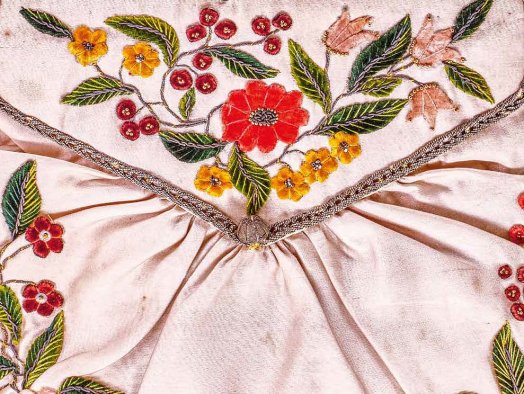
The evening handbags are small and richly decorated, made of precious fabrics: taffeta, velvet, pleated silk, embroidered canvas or fabric woven with beads. They are adorned with applied flowers, beaded leaves, stones set like gemstones in a ring and gold embossing inspired by the Orient, often with a silver or decorative metal frame.
The afternoon handbags are larger and more practical, made of snakeskin, crocodile, saffian, and smooth or embossed leather. They stand out for their unusual shapes, such as a trapezoid, and for their striking metal clasps, buckles and fastenings.
The collection is completed by a net shopping bag made of cotton fibre (1928), a reminder of everyday shopping in the First Republic. Also on display are elegant antique mesh bags from the early 20th century.
II. LETTERS
Gustav Mahler (1860–1911)
Composer and conductor
Born in Kaliště in Bohemia, one of the most important composers of the turn of the 20th century and director of the Vienna Court Opera. He wrote this letter from Berlin to his fiancée Alma Schindler, whom he married in March 1902. He mentions his sister Justina, his journey to a concert in Dresden and Wagner's Mastersingers of Nuremberg.
Berlin, 15th December 1901
"I still cannot rid myself of the fear and apprehension that so beautiful and lovely a dream might vanish…"
Vojtěch Náprstek (1826–1894)
Patron, patriot and museum founder
A Prague entrepreneur and patron, founder of today's Náprstek Museum of Asian, African and American Cultures. This short Christmas note was addressed to his wife Josefa Náprstková ("Pepička"), who shared his educational and charitable work.
27th December 1875
"May you enjoy it in contentment and in good health, the both of you!"
Rudolf Kremlička (1886–1932)
Painter
A Czech painter known for his depictions of women, bathers and Prague scenes; his work was strongly shaped by his stays in France. He wrote this note from Paris to his wife Marie ("Maruška"), whom he greatly missed during his long study trip.
Paris, 22nd October 1924
"Wherever I go, I think of you, and I do not like finding myself alone, for I miss you very much."
Jan Štursa (1880–1925)
Sculptor
The founder of modern Czech sculpture and professor at the Academy of Fine Arts in Prague. He wrote this letter in Brno while recovering from malaria contracted during the First World War – only four months before his untimely death. He signed it with the intimate name "Jenina".
Brno, 9th January 1925
"I want no one else in all the world, nor do I look forward to seeing anyone as I look forward to seeing you."
Vladislav Vančura (1891–1942)
Writer, physician and playwright
One of the most remarkable prose writers of interwar Czech literature, author of Capricious Summer and Marketa Lazarová. This undated letter from his youth was addressed to "Miss Marta". It is full of youthful fervour and promises to mend his ways, study hard and give up even dancing lessons.
"And now, Marta, the mists have risen above the river, and it seems to me that with them my sad thoughts have fled away…"
Jarmila Dimmerová & Jaroslav Preiss
Social correspondence
This pair of letters illustrates the courteous social etiquette of the First Republic. Jarmila ("Jája") Dimmerová of Smíchov invites the "dear Doctor" to a friendly dinner for six. JUDr. Jaroslav Preiss (1870–1946), director general of the Živnostenská banka and one of the most influential figures in the economic life of the First Republic, accepts two days later and looks forward to receiving her for luncheon – "with respectful compliments".
Prague-Smíchov, 17th April 1932 / Prague, 19th April 1932
"…there will be only six of us." – "I beg to thank you for your kind invitation…, which I shall have the pleasure of accepting."
Exhibition curator: Ing. arch. Zuzana Ilinčevová
III. BOHEMIAN GARNET JEWELLERY
This period jewellery set with Bohemian garnets dates from the first half of the 19th century and from around 1900. It includes necklaces (a garnet string and a collier), bracelets, earrings and a ring, a gold clasp and a cameo brooch pendant. Alongside Bohemian garnets, some pieces also feature almandine. The stones are set in gold, silver or tombac, a more affordable alloy that made garnet jewellery accessible to women of all walks of life. Some designs have been produced unchanged for 100–150 years.
On loan from the Museum of Bohemian Garnet, Prague and private collection of a private collector.
THANK YOU TO THE EXHIBITION PATRONS
