English
 Čeština
Educational Ecological Activities
In the setting of the historic Minorite Monastery complex in Prague, we develop ecological education as a natural part of our mission. We build on the spiritual and cultural heritage of the place and open it to children, schools, and families as a living space for knowledge, experience, and respect for nature.
Learning Through Experience
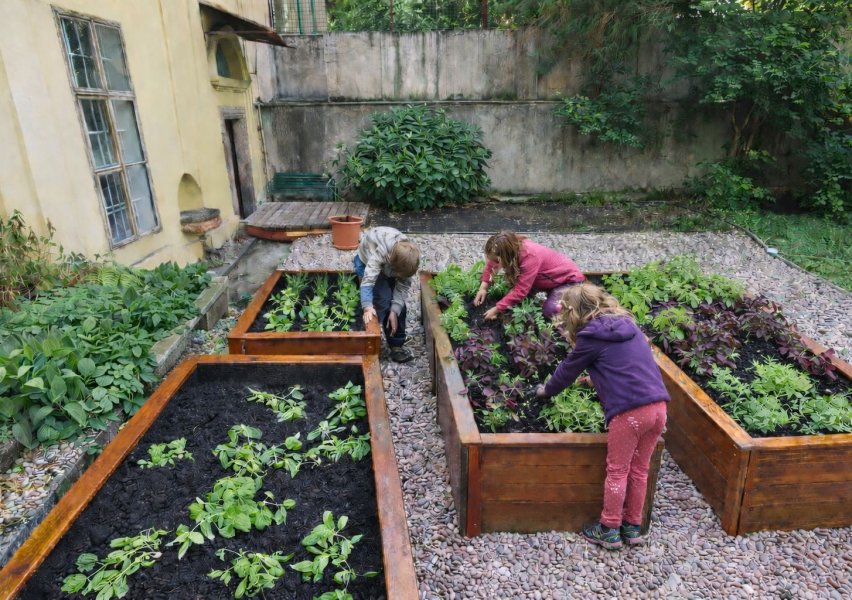
Our programs are based on personal experience. Children can try for themselves how vegetables and fruits actually grow, how fresh herbs smell, the importance of healthy soil, and why caring for the landscape matters. We help them discover the natural connections between humans and nature—so that learning is not just theoretical but deeply felt.
At a time when many urban children know food mainly from supermarket shelves, we provide an authentic experience of growth, care, and patience. We show that nature has its own rhythm, history, and tradition.
Monastery Gardens as a Living Classroom
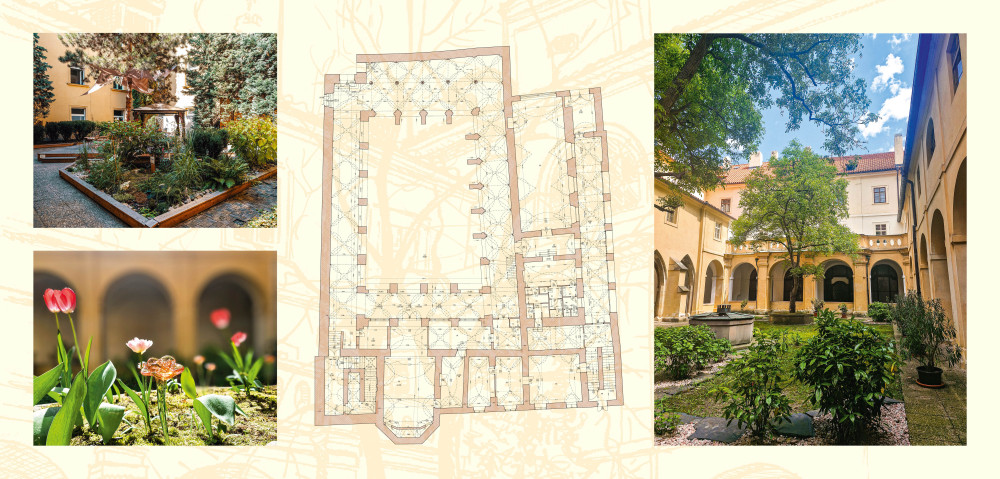
We have opened two monastery gardens inspired by the tradition of Franciscan gardens. These gardens have long been places for cultivation, reflection, and practical learning. In their spirit, we create a space where history intersects with current topics of ecology and sustainability.
We draw inspiration from Saint Francis of Assisi, patron of ecology and founder of the Minorite Order. His emphasis on respect for nature, humility, and responsibility for the world around us is reflected in every educational project we undertake.
Broadening Horizons and Supporting Schools
We carry out educational ecological activities as concrete support for schools in fulfilling their educational mission. The programs connect natural sciences, history, tradition, and value-based education. We guide children to understand broader contexts—where their food comes from, how nature’s cycles work, why protecting the environment is important, and how they can contribute to a more sustainable future.
We create a safe and inspiring space where education, community, and care for the environment come together. We believe that through experience, dialogue, and respect for tradition, it is possible to build a responsible relationship with nature and society.
Our goal is to nurture a generation that understands the value of cultural heritage, nature, and cooperation—and that carries these values forward.